
Availability :
@ Turbostart
Local Time :
8:05 AMLocation :
Bangalore, KA
Availability :
@ Turbostart
Local Time :
8:05 AMLocation :
Bangalore, KA
Availability :
@ Turbostart
Local Time :
8:05 AMLocation :
Bangalore, KA
Availability :
@ Turbostart
Local Time :
8:05 AMLocation :
Bangalore, KA
Jahnavi Jainwal, 2025
Role
Product Designer | Turbostart
Role
Product Designer | Turbostart
Platform
Enterprise Web SaaS
Platform
Enterprise Web SaaS
Timeline
6 months (Aug 2025 - Jan 2026)
Automating and scaling a Cloud Finops platform
Automating and scaling a Cloud Finops platform
Automation | UI /UX Revamp | Design System
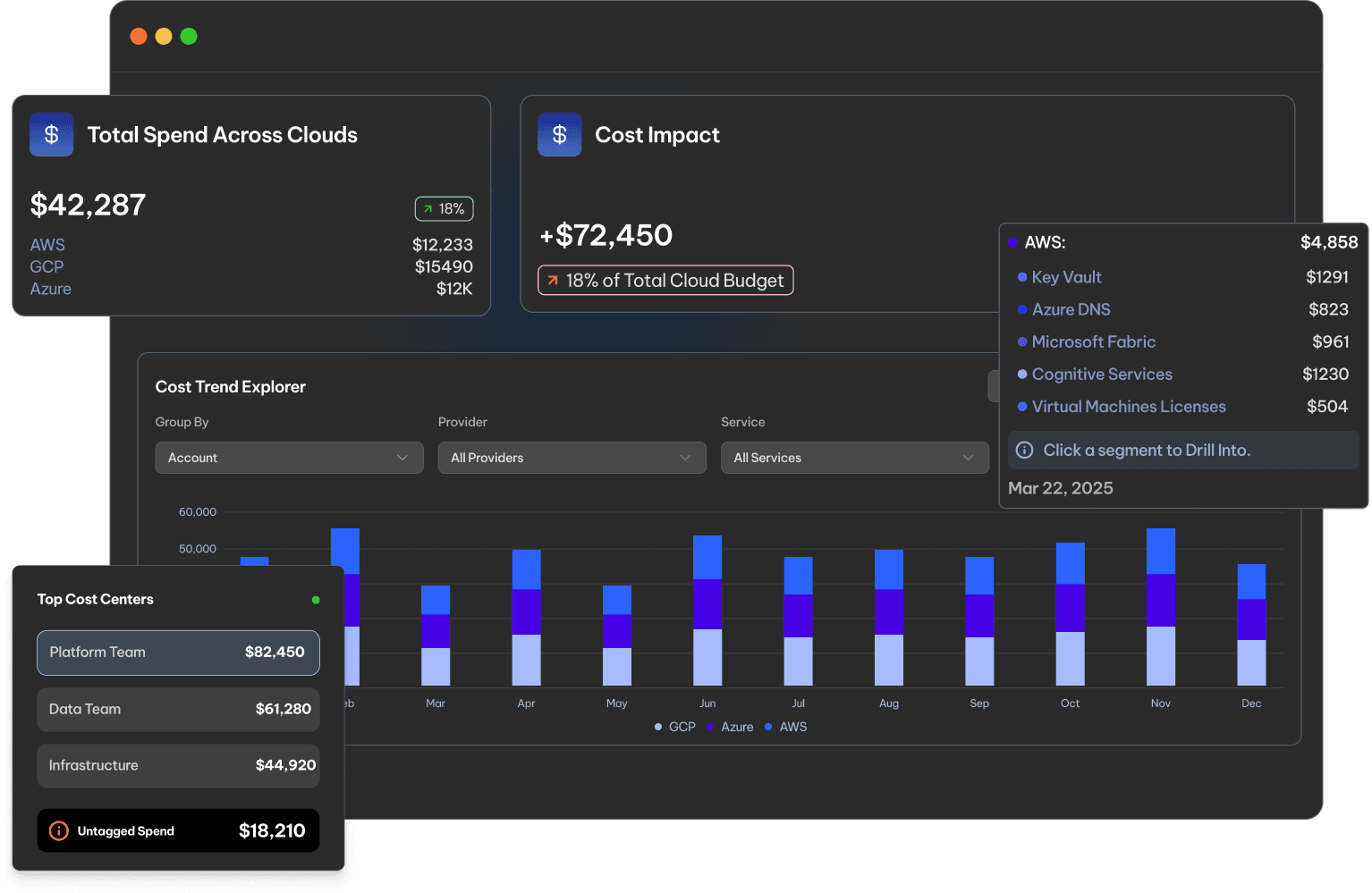
Cloudverse is an enterprise FinOps platform used to manage, optimize and automate cloud spending.
The client requirements were to transform Cloudverse into an automation-first product that could support scale, design consistency and a seamless user experience. For six months I was embedded within the Cloudverse team and business. Working alongside engineers, stakeholders and PMs. What came from this was not simply a revamp of the product, but a complete overhaul of the company’s branding and language.
Cloudverse is an enterprise FinOps platform used to manage, optimize and automate cloud spending.
The client requirements were to transform Cloudverse into an automation-first product that could support scale, design consistency and a seamless user experience. For six months I was embedded within the Cloudverse team and business. Working alongside engineers, stakeholders and PMs. What came from this was not simply a revamp of the product, but a complete overhaul of the company’s branding and language.
Over a 6-month end-to-end product revamp, the entire platform was redesigned across UI, UX, and workflow architecture. This case study narrows in on the Automation Engine, which sat at the center of the transformation.
Over a 6-month end-to-end product revamp, the entire platform was redesigned across UI, UX, and workflow architecture. This case study narrows in on the Automation Engine, which sat at the center of the transformation.
Discovery Phase
Discovery Phase
We started the process by taking Knowledge Transfers from the Design team at Cloudverse and thoroughly audited the existing platform for inconsistencies in the overall user flow. We also began interviewing our users at SISL, DTDC and Axis, to identify gaps and pain points.
We started the process by taking Knowledge Transfers from the Design team at Cloudverse and thoroughly audited the existing platform for inconsistencies in the overall user flow. We also began interviewing our users at SISL, DTDC and Axis, to identify gaps and pain points.
“We already have a solid recommmendation engine, but we need Cloudverse to actually take action. If there’s a safe way to automate things like deleting unused snapshots or right-sizing VMs, and teams can trust us with the right permissions, that’s where the real savings happen.”
“We already have a solid recommmendation engine, but we need Cloudverse to actually take action. If there’s a safe way to automate things like deleting unused snapshots or right-sizing VMs, and teams can trust us with the right permissions, that’s where the real savings happen.”
Chand Deshwal
Chand Deshwal
CEO & Founder , Cloudverse AI
CEO & Founder , Cloudverse AI
1.
Defining User and Client Requirements
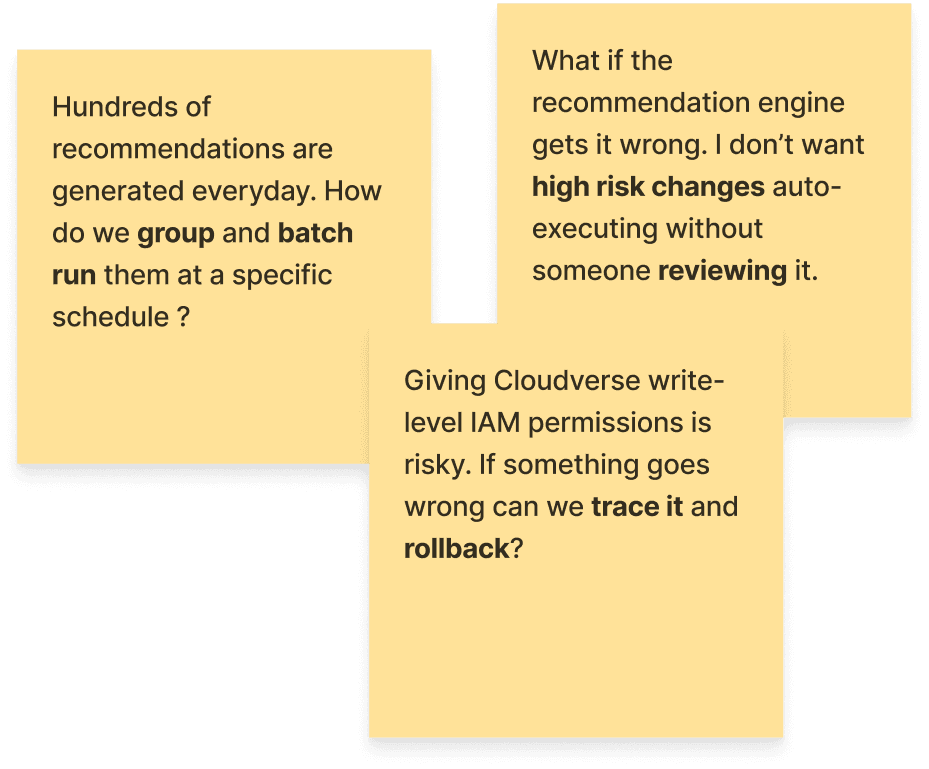
Interviewing Cloudverse users at SISL, DTDC and Axis gave us a general idea of what was required in the market. We understood their responsibilities, motivations and pain points.
Interviewing Cloudverse users at SISL, DTDC and Axis gave us a general idea of what was required in the market. We understood their responsibilities, motivations and pain points.
2.
Problem Statement Definition
How do we create a seamless experience that allows users to automate the extensive task of finding multiple profitable recommendations and executing it, with minimal effort and time?
How do we create a seamless experience that allows users to automate the extensive task of finding multiple profitable recommendations and executing it, with minimal effort and time?
3.
Ideation
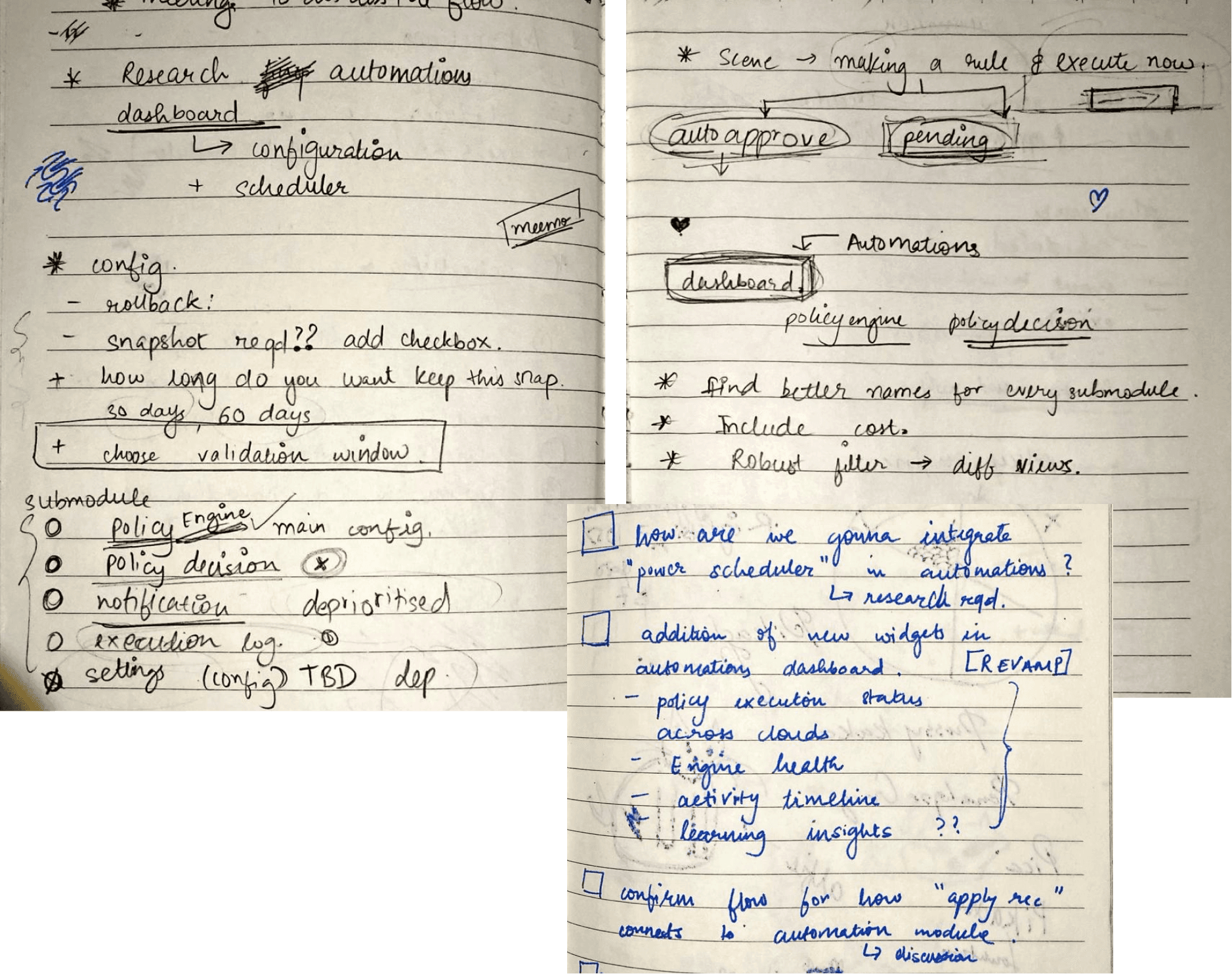
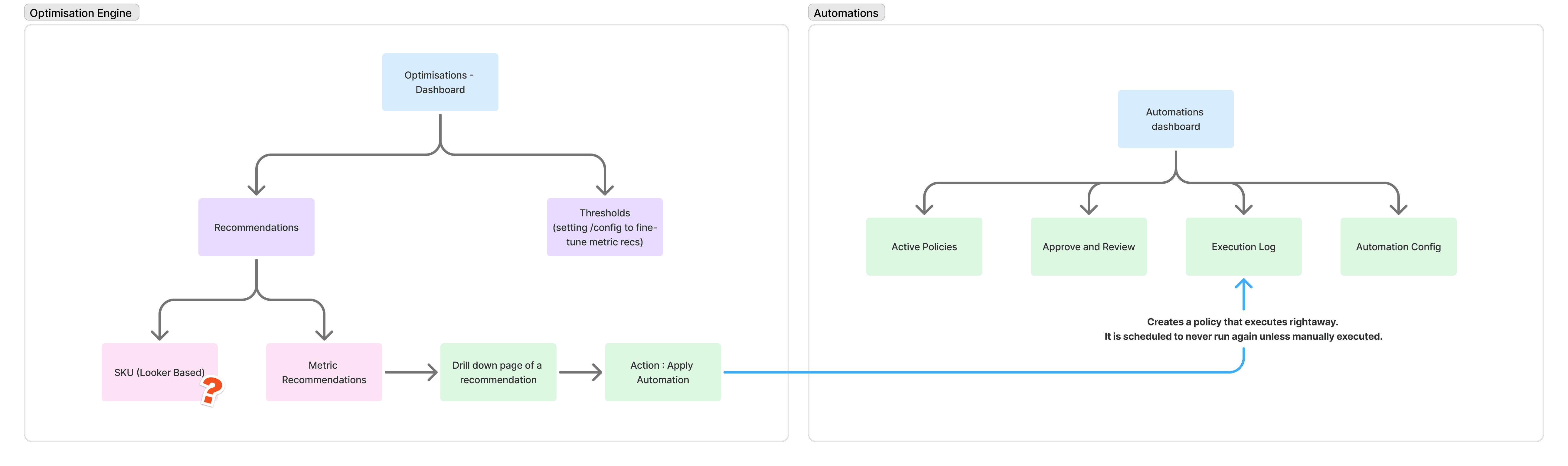
After discussions with the engineering team to validate technical feasibility, we started building user flows to integrate the Automations module smoothly within existing product workflows.
Modules involved: Permissions and Onboarding, Recommendations (Optimization Engine), Scheduler, Role Based Access Control ( RBAC )
After discussions with the engineering team to validate technical feasibility, we started building user flows to integrate the Automations module smoothly within existing product workflows.
Modules involved: Permissions and Onboarding, Recommendations (Optimization Engine), Scheduler, Role Based Access Control ( RBAC )
4.
Prototyping
We started making wireframes prototypes and tested various use cases with the backend. Simultaneously the design system was built which reduced design to development handoff effort by ~43%.
We also conducted about 2-3 UI/UX reviews after the development of each module, to ensure all features in the pipeline were moving smoothly.
We started making wireframes prototypes and tested various use cases with the backend. Simultaneously the design system was built which reduced design to development handoff effort by ~43%.
We also conducted about 2-3 UI/UX reviews after the development of each module, to ensure all features in the pipeline were moving smoothly.
Synthesizing user research into a Value Proposition
Synthesizing user research into a Value Proposition
"Cloudverse's Automation Engine saves hours by turning manual discovery and execution into trackable scheduled policies that filter and run these recommendations minimizing time and effort and maximising realized cloud savings"
"Cloudverse's Automation Engine saves hours by turning manual discovery and execution into trackable scheduled policies that filter and run these recommendations minimizing time and effort and maximising realized cloud savings"
Design System
Design System
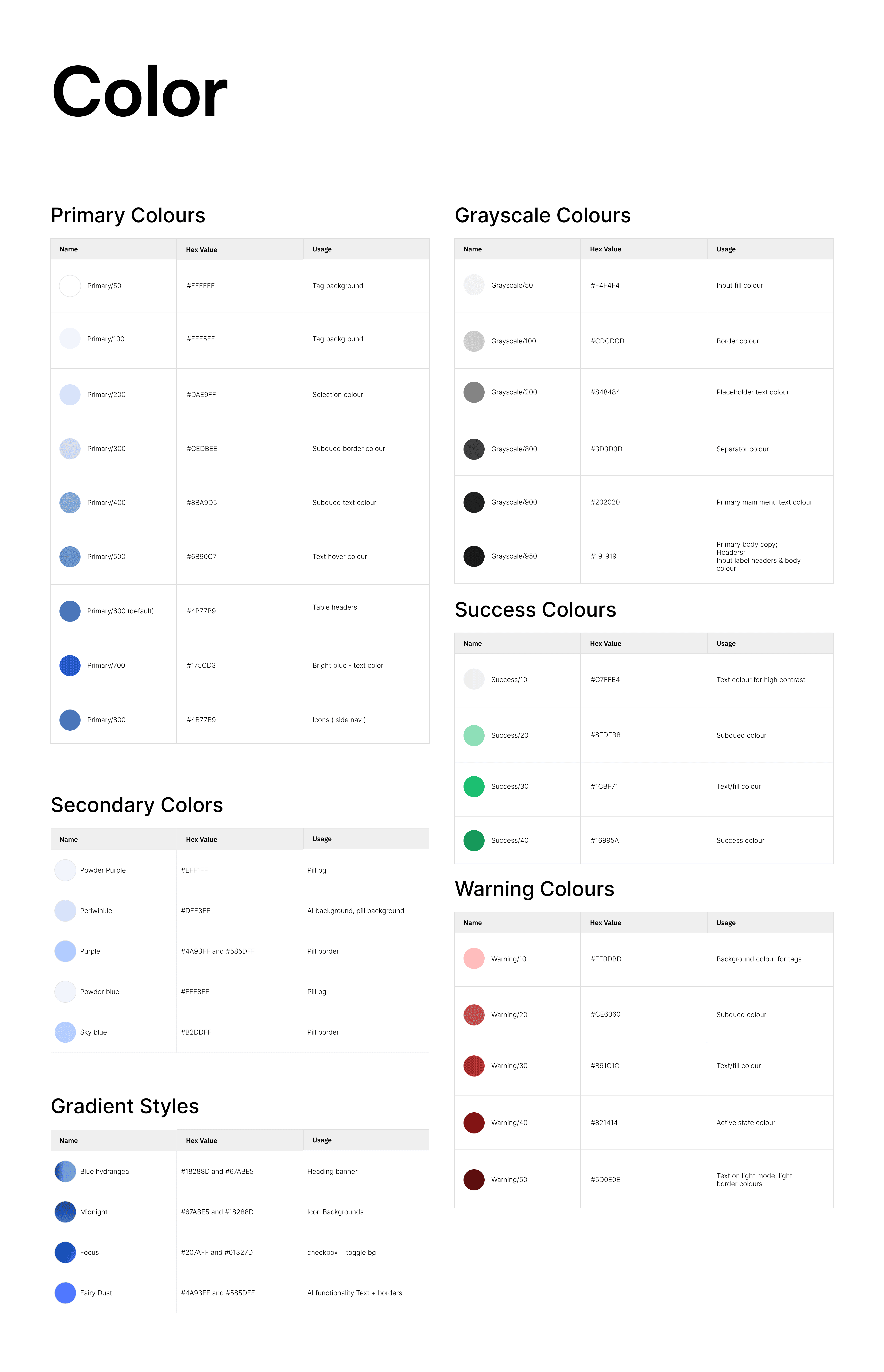
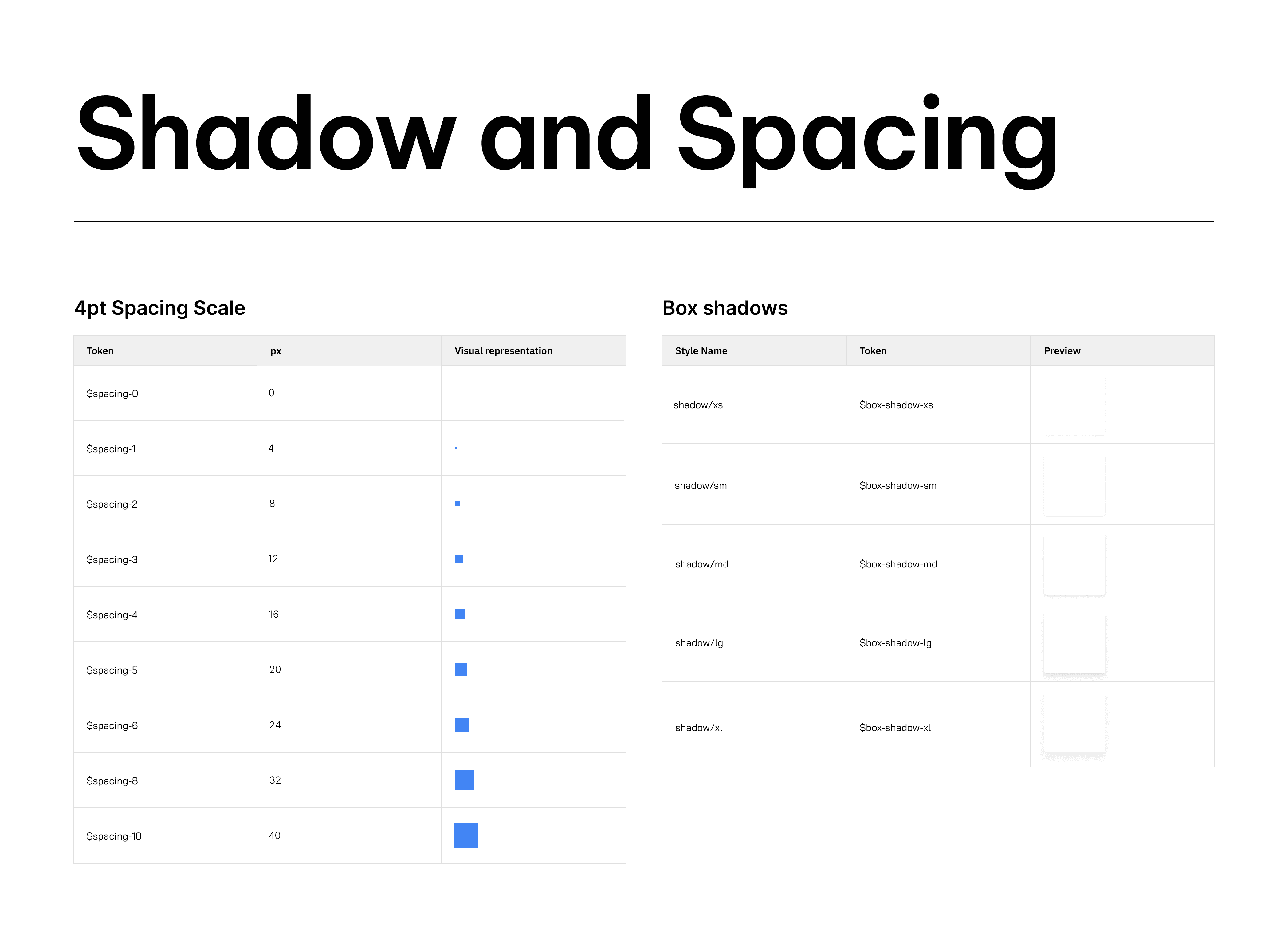
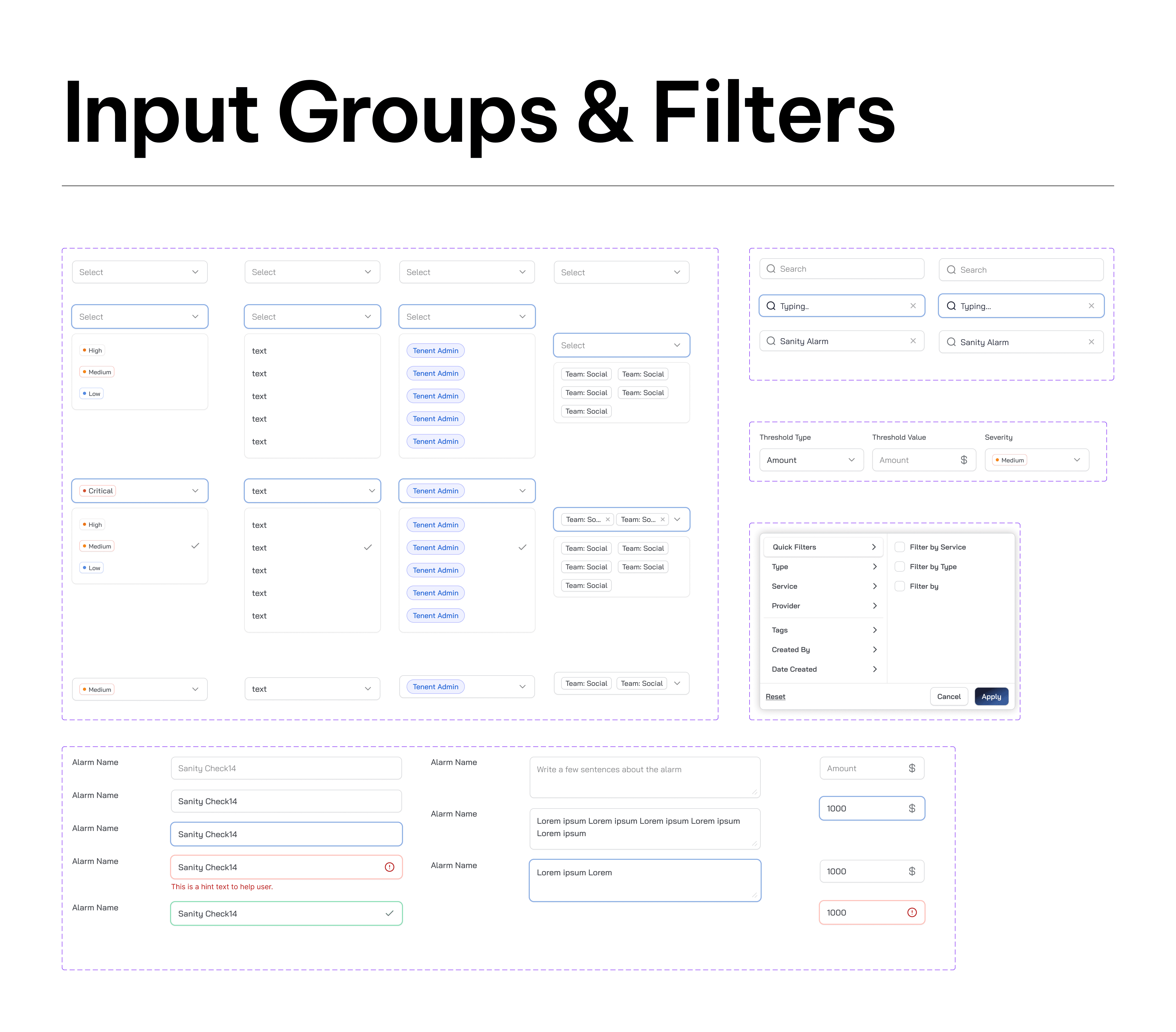
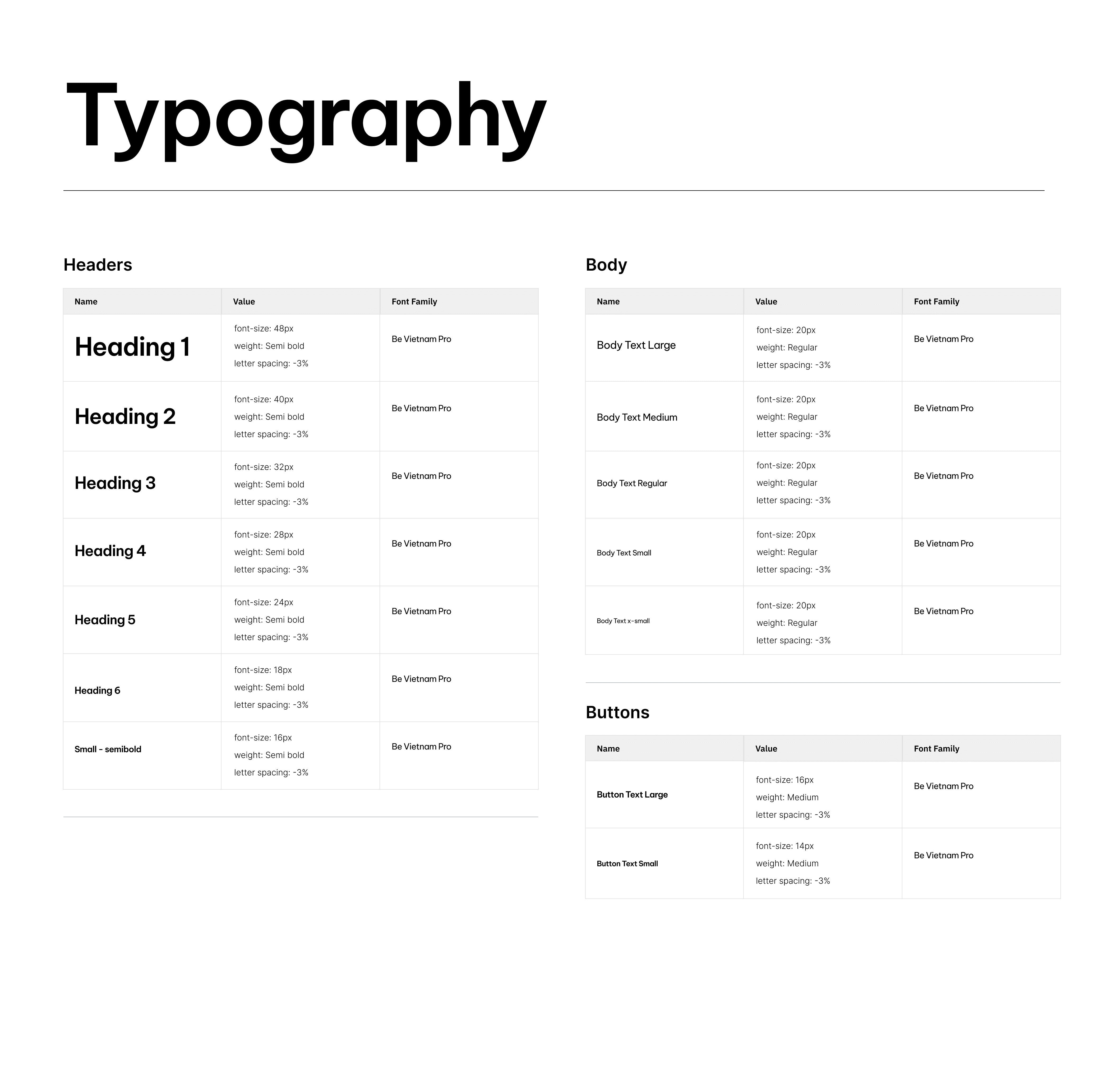
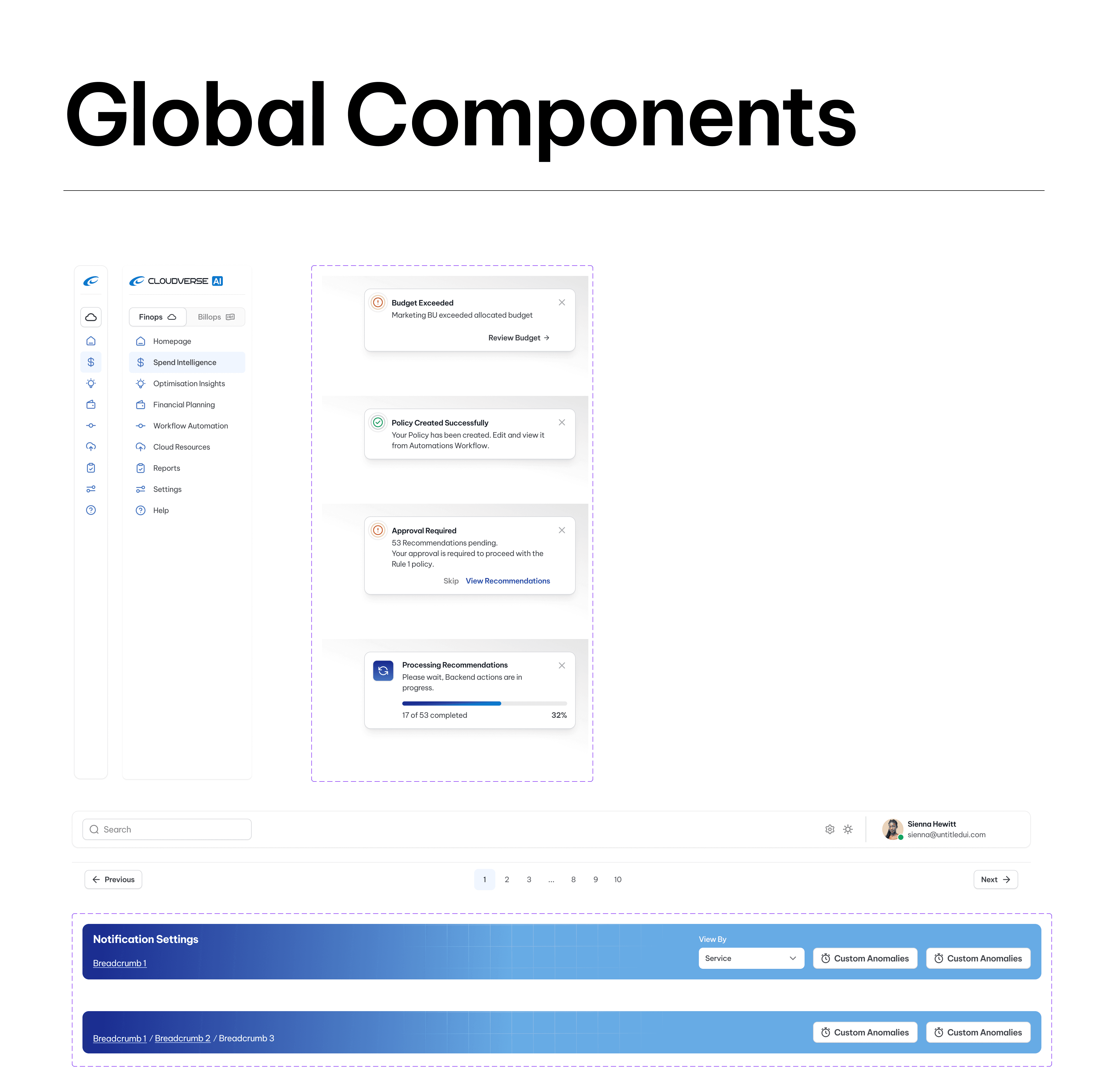
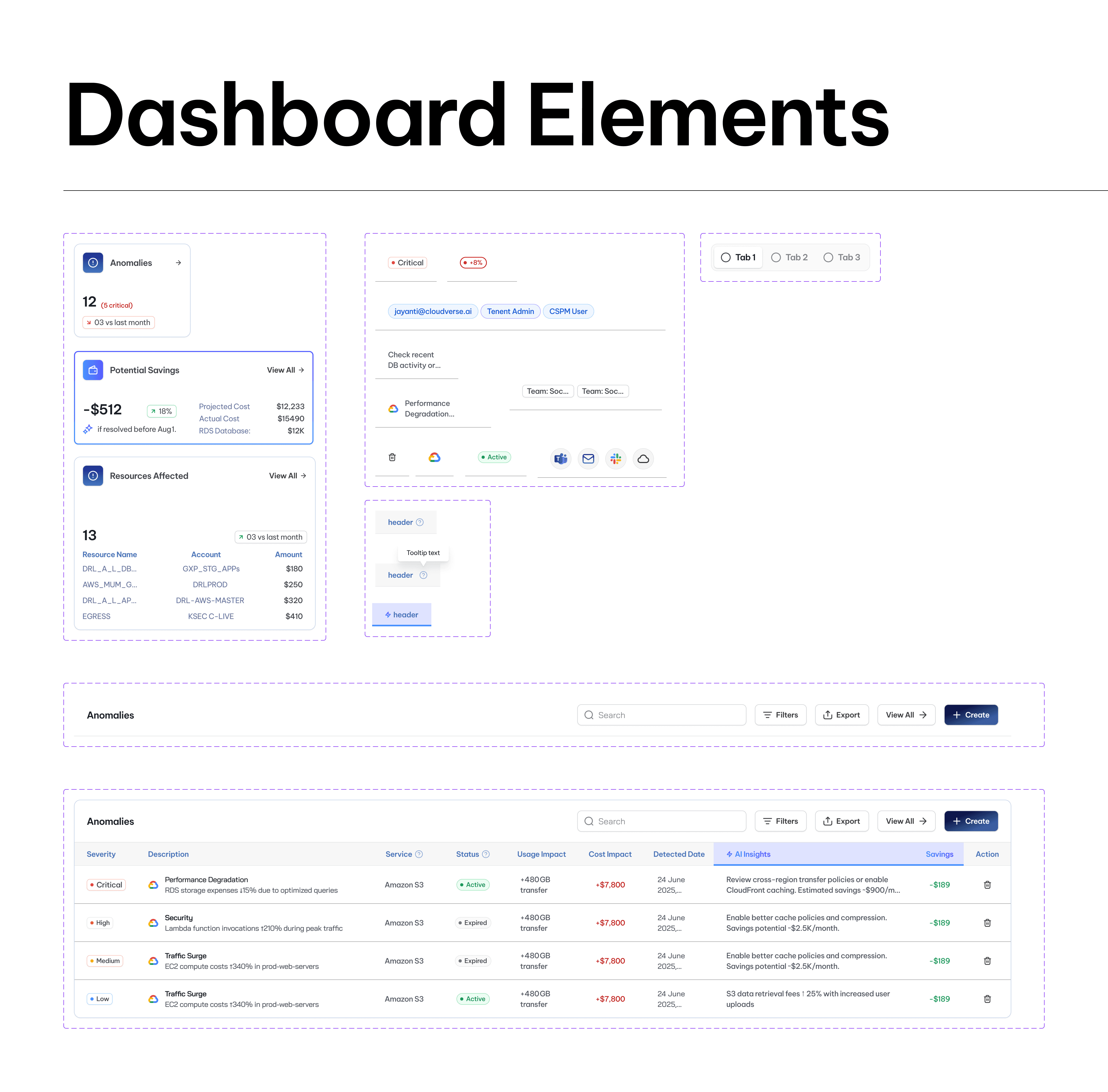
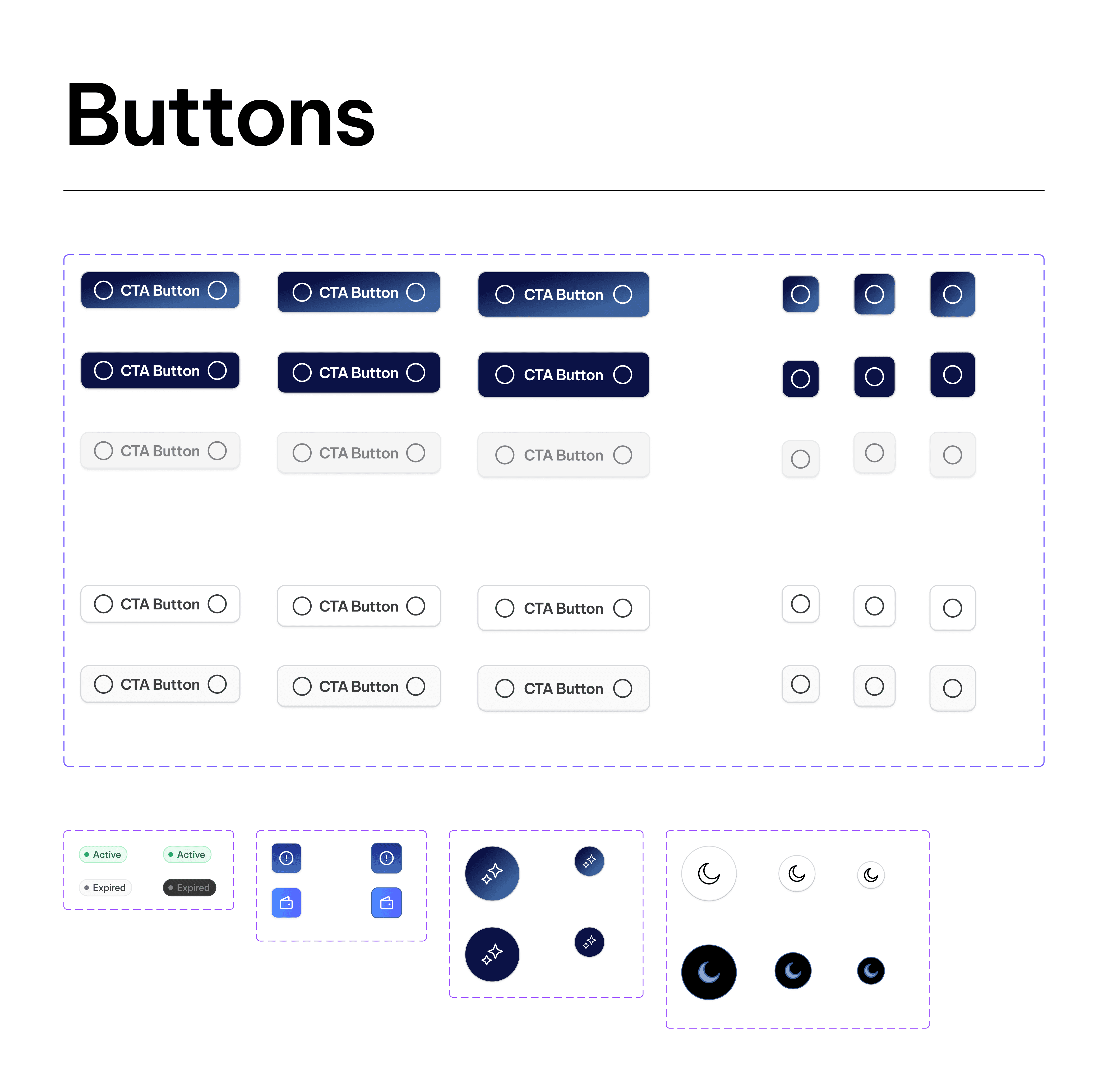
As the product grew and new modules and features were added, the existing design system could no longer support scale, consistency, or new UI patterns. We had accessibility issues like inconsistently sized components, missing hierarchy in typography and limited support for data-heavy UI.
As the product grew and new modules and features were added, the existing design system could no longer support scale, consistency, or new UI patterns. We had accessibility issues like inconsistently sized components, missing hierarchy in typography and limited support for data-heavy UI.
The Workflow Automation Module
The Workflow Automation Module
The Overview gives a quick snapshot of active policies, pending actions, and overall impact. In Active Policies, users create and fine-tune rules defining filters, scope, schedules, and approval type (manual or auto). Once active, the policy groups matching recommendations automatically. If set to manual, those items appear in Review & Approvals, where users can assess and batch-approve them. Execution then begins and is tracked in Execution Logs, providing full visibility into status and changes. Settings manages global controls like permissions and safeguards to ensure everything runs within defined boundaries.
The Overview gives a quick snapshot of active policies, pending actions, and overall impact. In Active Policies, users create and fine-tune rules defining filters, scope, schedules, and approval type (manual or auto). Once active, the policy groups matching recommendations automatically. If set to manual, those items appear in Review & Approvals, where users can assess and batch-approve them. Execution then begins and is tracked in Execution Logs, providing full visibility into status and changes. Settings manages global controls like permissions and safeguards to ensure everything runs within defined boundaries.
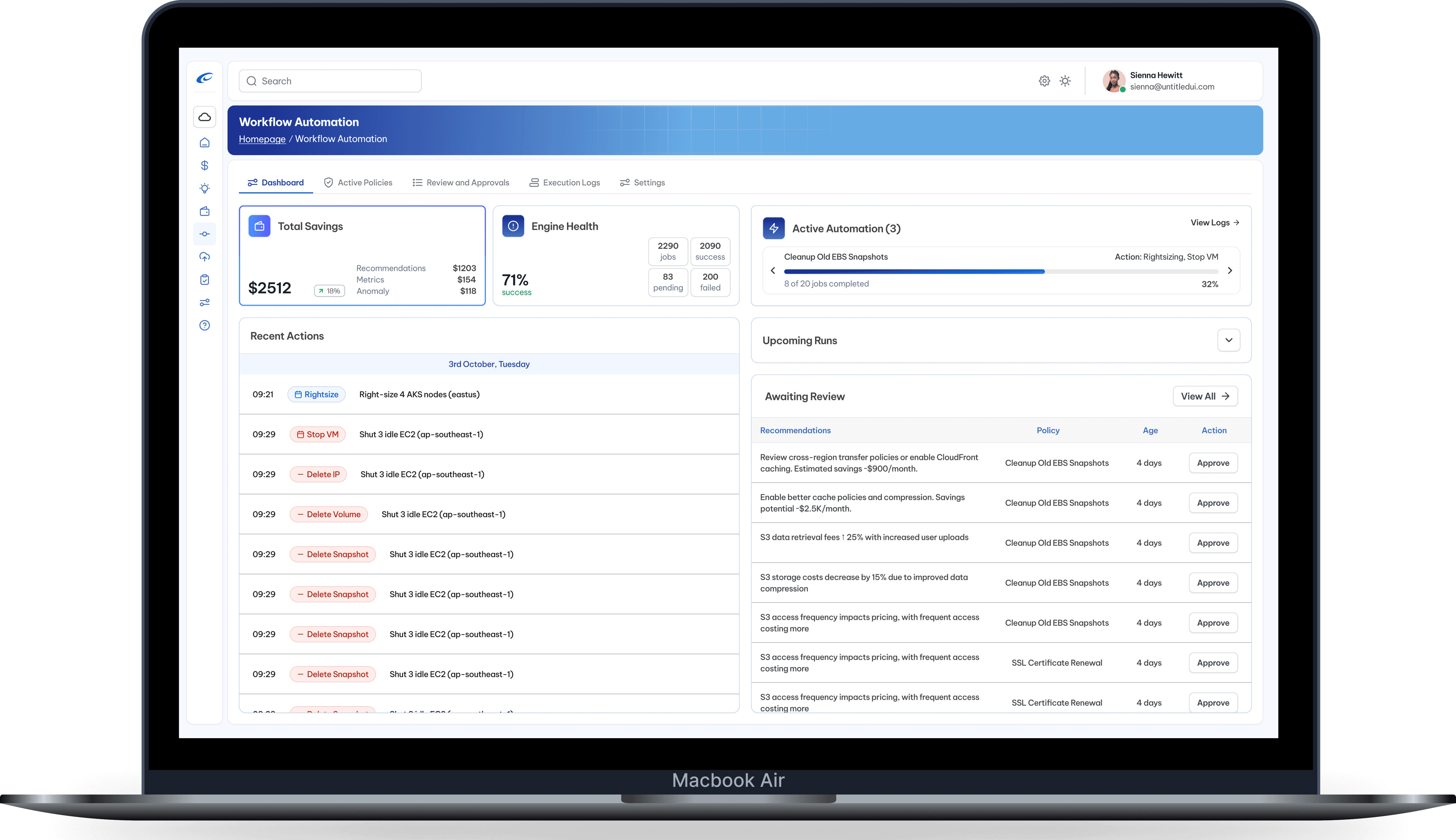
The Dashboard gives a quick snapshot of active automations, recent and pending actions, scheduled policy runs and overall impact.
The Dashboard gives a quick snapshot of active automations, recent and pending actions, scheduled policy runs and overall impact.
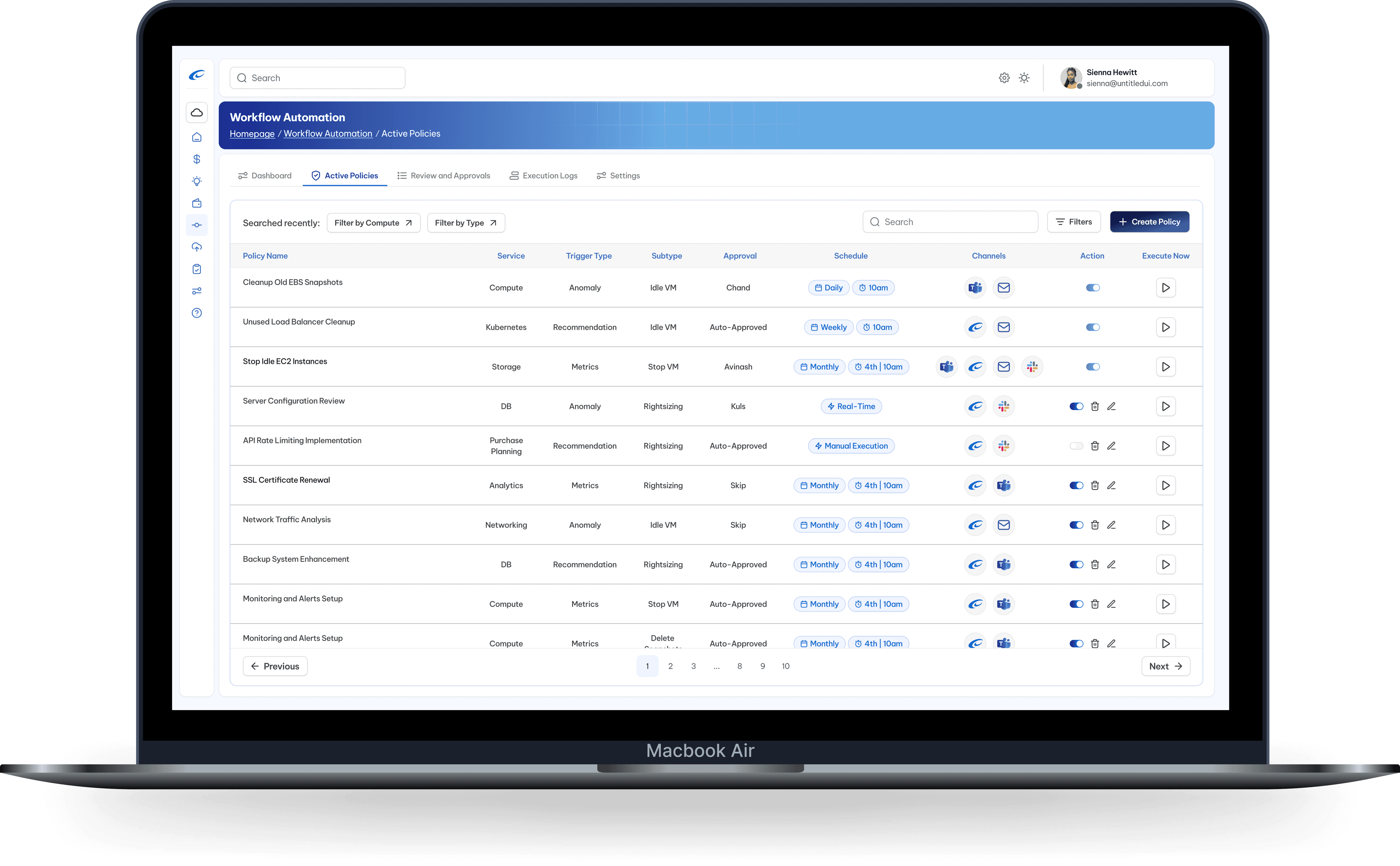
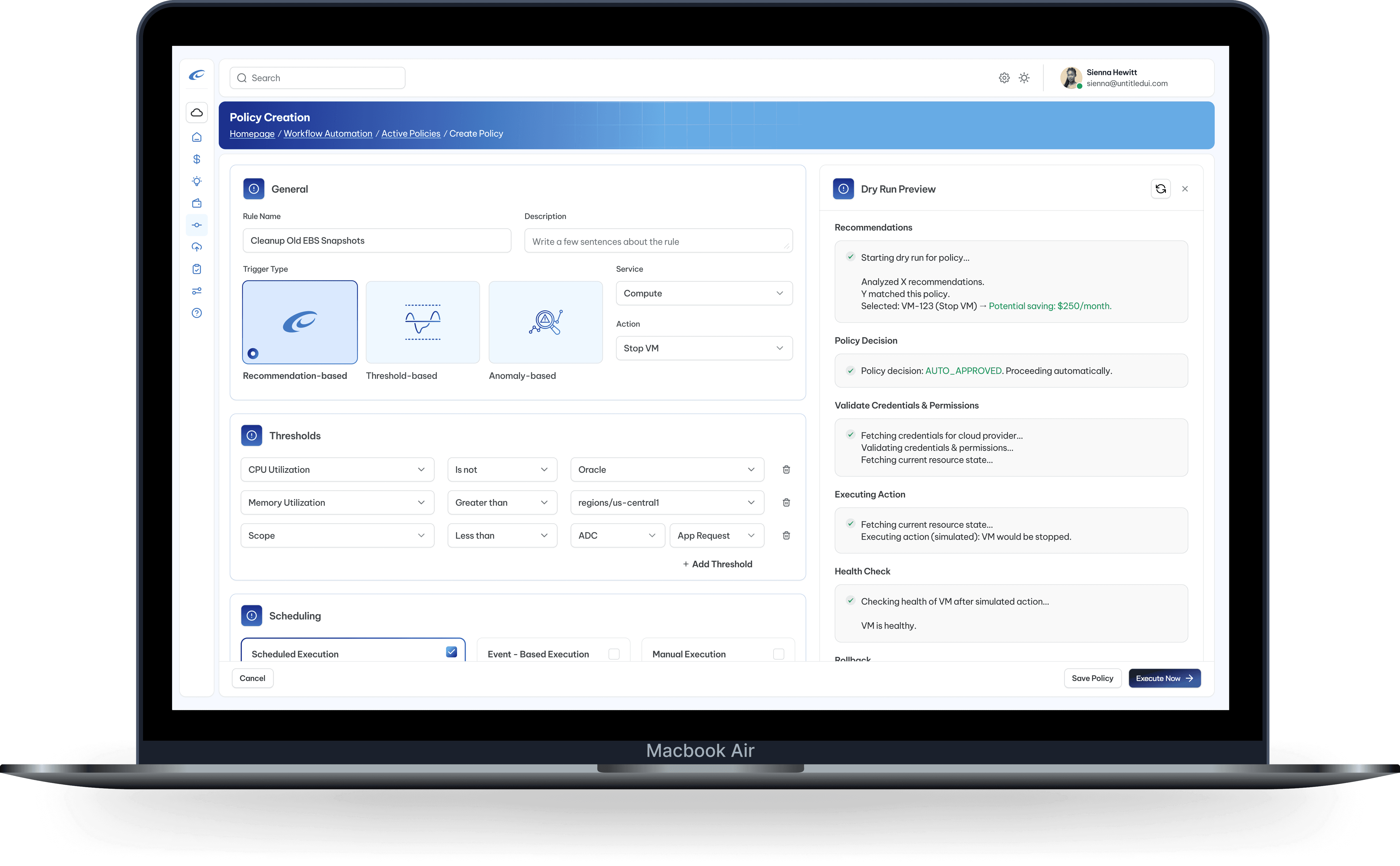
The Active Policies tab shows you tabular data about scheduled optimization runs that will generate recommendations that the automation engine executes after approval; or automatically depending on configuration selected. This is also where you would create new policies. Policy Creation feature has fully customizable guardrails and a dry run preview to see your policy run in real time, useful for debugging errors.
The Active Policies tab shows you tabular data about scheduled optimization runs that will generate recommendations that the automation engine executes after approval; or automatically depending on configuration selected. This is also where you would create new policies. Policy Creation feature has fully customizable guardrails and a dry run preview to see your policy run in real time, useful for debugging errors.
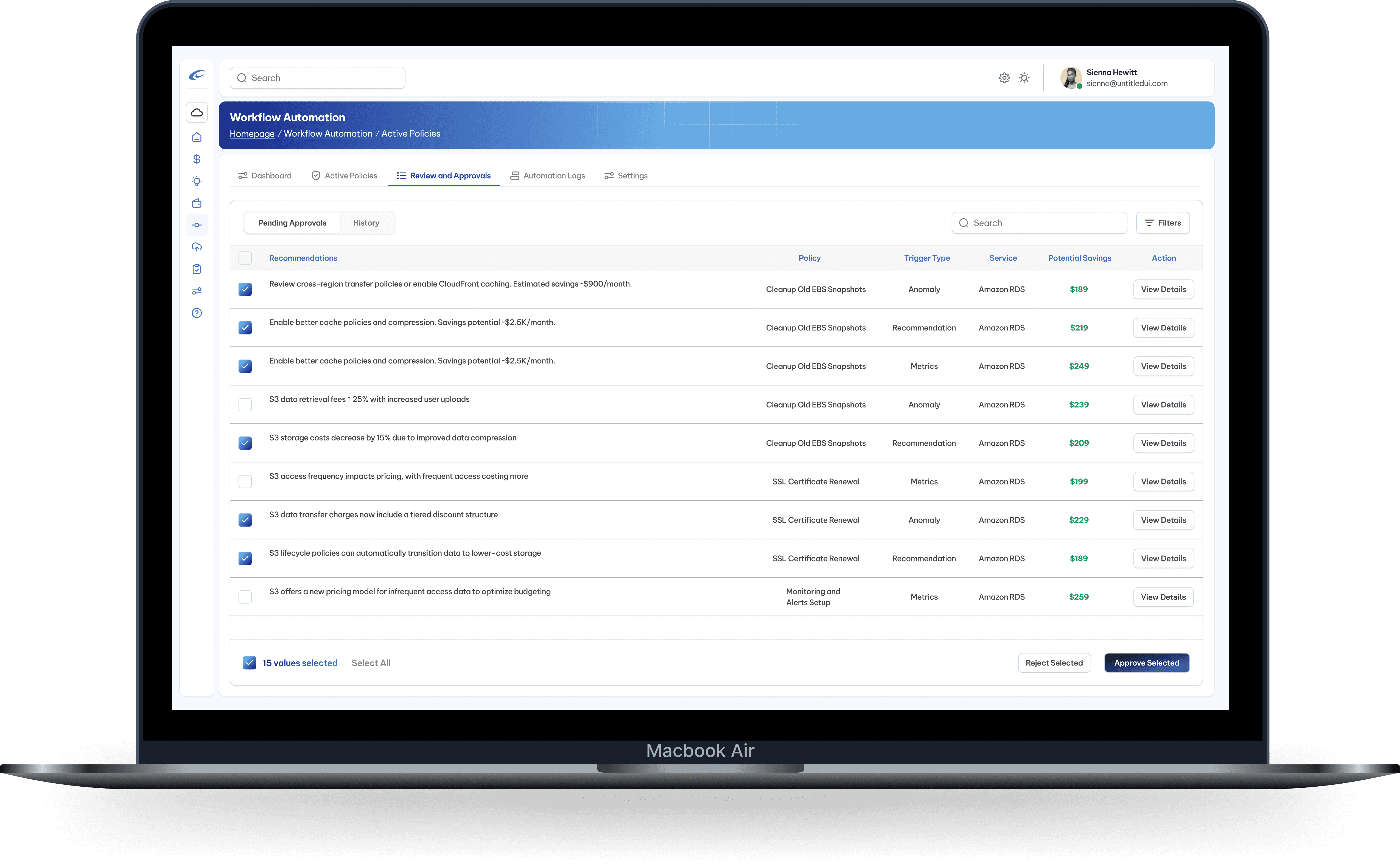
Review and Approvals has all the generated recommendations that pass the scope filters and configuration set during policy creation. These need to be approved for the automation engine to execute them, hence reducing your cloud bill by deleting unnecessary snapshots, rightsizing VMs, etc
Review and Approvals has all the generated recommendations that pass the scope filters and configuration set during policy creation. These need to be approved for the automation engine to execute them, hence reducing your cloud bill by deleting unnecessary snapshots, rightsizing VMs, etc
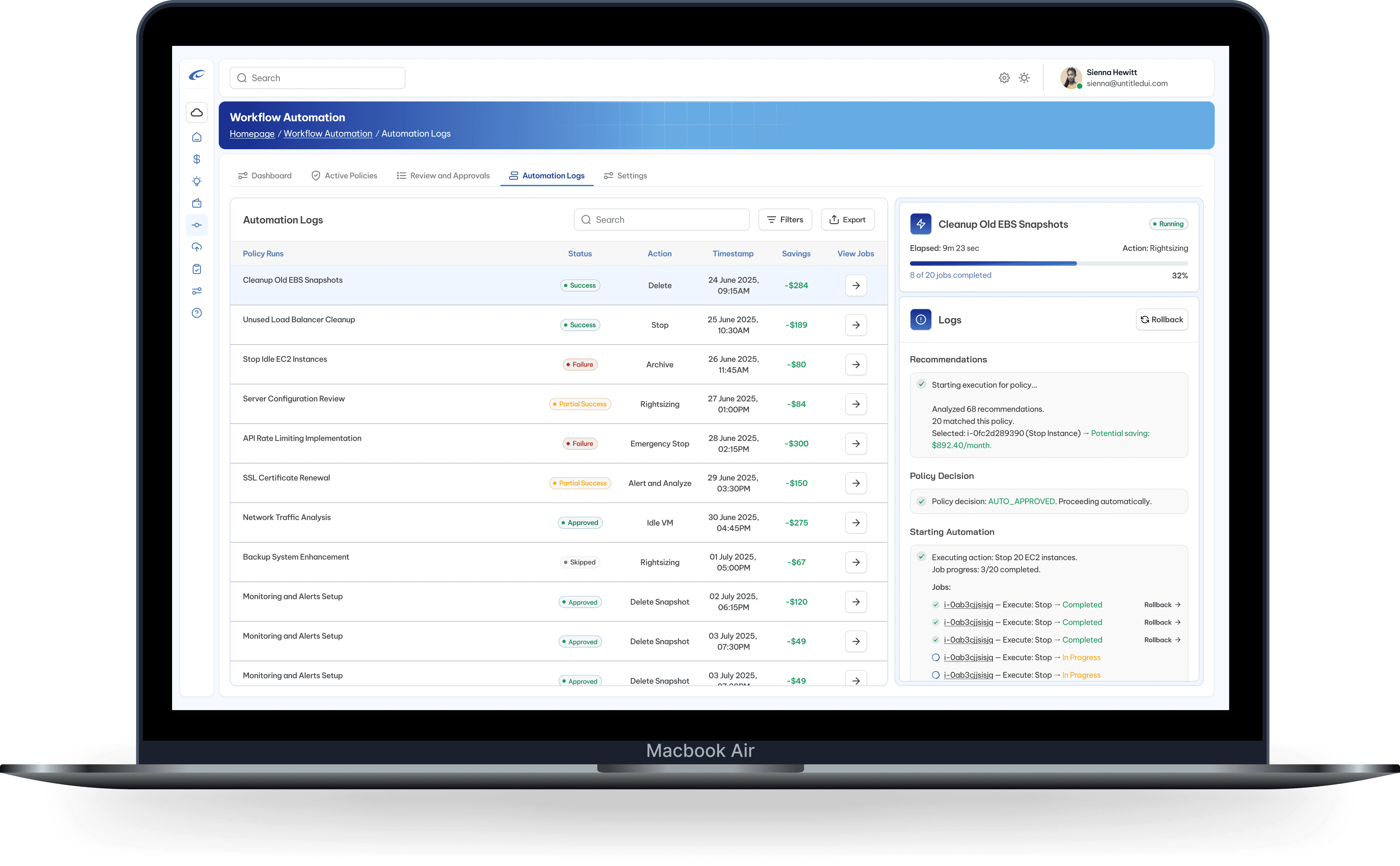
Automation Logs helps you keep track of every policy run, shows cloud savings, helps you troubleshoot failed policy runs and rollback unintended changes and permissions, made by the Automation engine.
Automation Logs helps you keep track of every policy run, shows cloud savings, helps you troubleshoot failed policy runs and rollback unintended changes and permissions, made by the Automation engine.
Marketing
A marketing website was developed to communicate the value and positioning of the product. I collaborated with marketing designers and content writers and made a website using Replit!
Access the live website here.
A marketing website was developed to communicate the value and positioning of the product. I collaborated with marketing designers and content writers and made a website using Replit!
Access the live website here.